Tennis is played in some of the most spectacular settings on Earth. While most players know their local club court, the world's most extraordinary tennis venues range from rooftops towering above city skylines to ancient palaces, desert stadiums lit by sunset, and arenas that hold 24,000 screaming fans. Here are the courts that prove tennis is not just a sport — it's architecture, history, and spectacle.
The Grand Slam Cathedrals
Centre Court, Wimbledon — The Most Famous Court on Earth

No tennis court carries more weight than Centre Court at the All England Lawn Tennis Club. Built in 1922 and seating 14,979 spectators, it hosts the Wimbledon final every July on immaculately maintained grass that is cut to precisely 8mm. The retractable roof, added in 2009, allows play to continue through London's unpredictable weather without sacrificing the open-air atmosphere that defines the Championships.
What makes Centre Court truly special is its atmosphere of hushed reverence. The Royal Box, draped in purple and green, sits above the south baseline. Players bow to the box when members of the Royal Family are present — a tradition dating back over a century. The grass itself is replanted every year from a specific blend of perennial ryegrass, maintaining a surface that plays faster than any other in professional tennis.

Court Philippe-Chatrier, Roland-Garros — The Colosseum of Clay
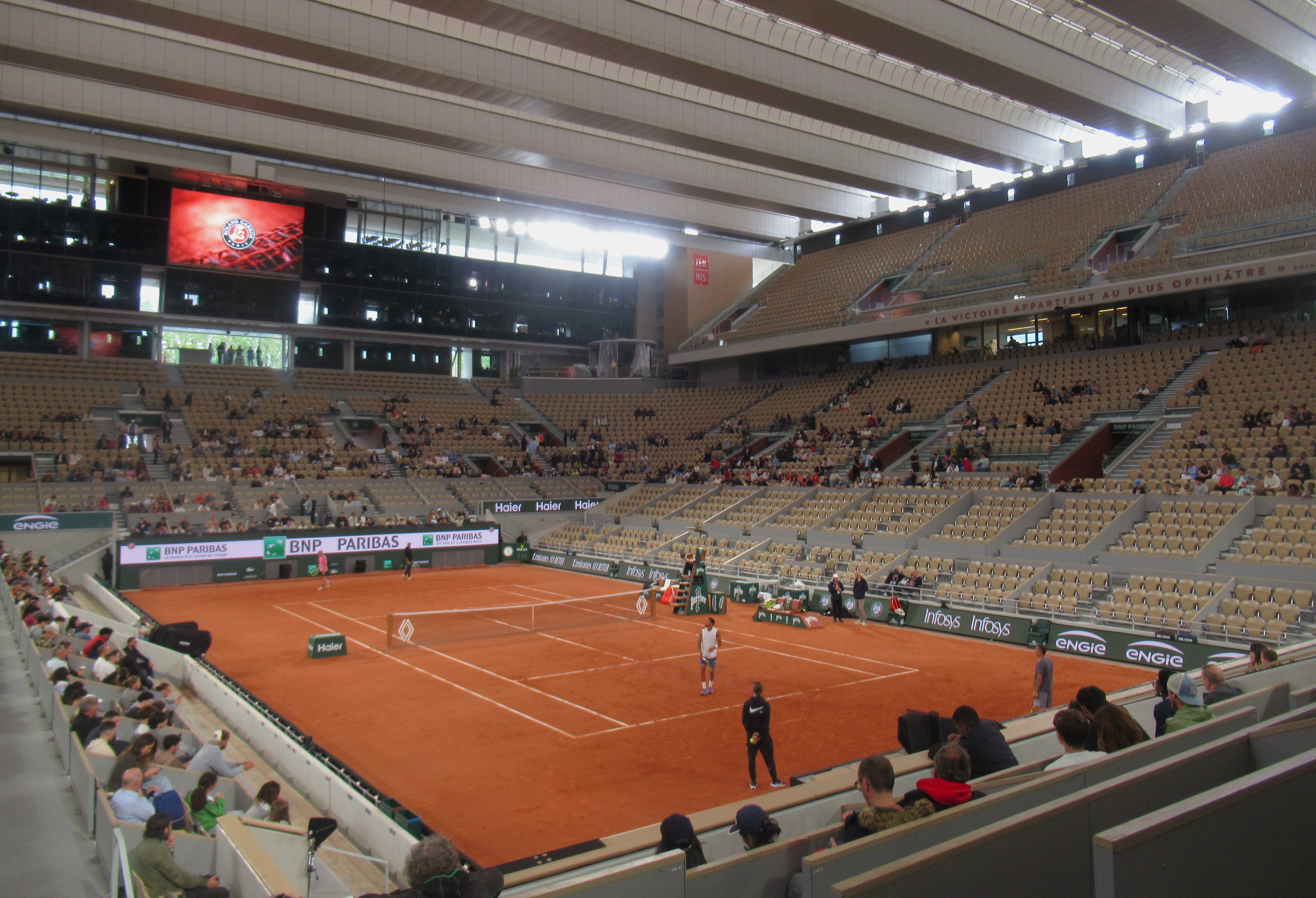
Roland-Garros is the only Grand Slam played on clay, and Court Philippe-Chatrier is its beating heart. Completely rebuilt between 2018 and 2020, the 15,225-seat stadium now features a retractable roof made of steel wings that open and close like an origami flower. The terra-cotta surface — made from crushed brick quarried in the Yvelines region — gives the court its distinctive red color that has become synonymous with the French Open.
The court sits in the Bois de Boulogne on Paris's western edge, surrounded by botanical gardens. During the renovation, architects preserved the intimate atmosphere that makes Roland-Garros unique among Grand Slams — spectators sit close to the action, and the acoustics amplify every grunt, shoe slide, and ball impact. Rafael Nadal won 14 of his record French Open titles on this court, earning it the unofficial nickname "Rafa's Living Room."
Arthur Ashe Stadium, New York — The Biggest Court in the World

Arthur Ashe Stadium in Flushing Meadows, Queens, is the largest tennis-specific venue ever built. With a capacity of 23,771, it dwarfs every other court in the sport. Named after Arthur Ashe — the first Black man to win the US Open, Wimbledon, and the Australian Open — the stadium received a retractable roof in 2016, ending decades of rain delays that had made the US Open unpredictable.
Night sessions at Arthur Ashe are unlike anything else in tennis. The stadium lights up against the New York City skyline, airplanes from nearby LaGuardia Airport roar overhead, and the crowd — fueled by the city's energy — creates a noise level that would be unthinkable at Wimbledon. It is the loudest, most electric tennis venue in the world.
Rod Laver Arena, Melbourne — Where the Season Begins

The Australian Open's main venue, Rod Laver Arena seats 14,820 and was the first Grand Slam court to install a retractable roof in 1988. Named after the legendary Rod Laver — the only player to win the calendar-year Grand Slam twice — the arena sits along the Yarra River in Melbourne Park, with the city's skyline as its backdrop.
Melbourne's extreme January heat has made the roof essential: when temperatures exceed 40°C (104°F), the Extreme Heat Policy kicks in and the roof closes, transforming the outdoor stadium into an air-conditioned indoor arena within minutes. The blue Plexicushion surface, unique among Grand Slams, provides a medium-fast pace that tends to produce the most balanced matches in the sport.
Hidden Gems and Spectacular Settings
Indian Wells Tennis Garden — Desert Oasis

Set against the dramatic backdrop of the San Jacinto Mountains in the Coachella Valley, Indian Wells Tennis Garden is often called the "fifth Grand Slam." Stadium 1, seating 16,100, is the second-largest tennis venue in the world. But it's the setting that makes Indian Wells unforgettable: matches begin in blazing desert sunshine and finish under a canopy of stars, with palm trees silhouetted against pink and orange sunsets.

Rooftop Courts — Tennis Above the Skyline
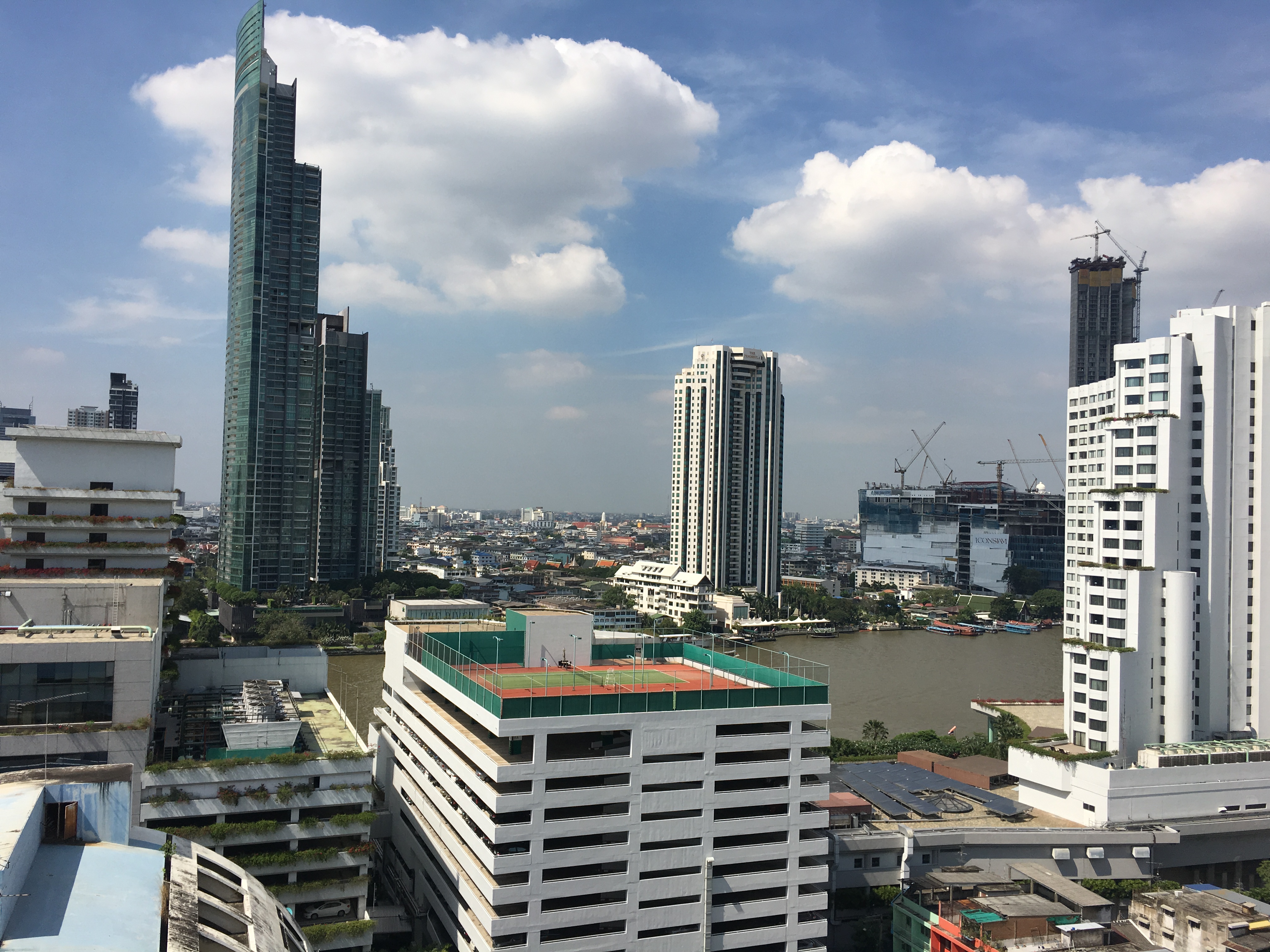
Some of the world's most exclusive tennis experiences happen high above the streets. Bangkok's rooftop courts offer players a game with panoramic views of temples and skyscrapers. In Dubai, the Burj Al Arab famously transformed its helipad — 210 meters above the Persian Gulf — into a tennis court for a promotional match between Andre Agassi and Roger Federer in 2005, creating one of the most photographed sporting images of the 21st century.

Hampton Court Palace — 500 Years of Tennis

The oldest playable tennis court in the world sits inside Hampton Court Palace, built by King Henry VIII in 1530. This is not lawn tennis but "real tennis" — the medieval ancestor of the modern game, played with asymmetric courts, sloping roofs called penthouses, and complex scoring. The court has been in continuous use for nearly 500 years, making it the longest-serving sports venue on the planet.
Walking into Hampton Court's tennis court is like stepping into a time machine. The wooden galleries, the tambour (a buttress that deflects the ball at unpredictable angles), and the dedans (a netted opening where spectators watch) are all original Tudor features. Membership is highly exclusive, and the waiting list stretches for years. Henry VIII himself played here, reportedly wagering enormous sums on matches against his courtiers.
Why Tennis Courts Matter
A tennis court is more than a rectangle with lines. The world's greatest venues transform a simple game into spectacle, history, and art. Whether it's the sacred hush of Wimbledon's Centre Court, the electric roar of Arthur Ashe at night, the desert sunset at Indian Wells, or a rooftop high above Bangkok, these courts remind us that tennis is played not just between two players — but between a player and a place.
Last updated: August 2026