For eleven years, the most dependable joke in tennis was that Alexander Zverev would win a Grand Slam next year. It was told kindly at first, when he was a 19-year-old beanpole with a serve like a dropped piano and a forehand that people compared to things rather than to other players. It was told less kindly later. By the time he was 27 it had curdled into something closer to a diagnosis: brilliant, durable, unlucky, and somehow always standing in the wrong place when the trophy was handed over.
Then, on a Sunday afternoon in June, the joke stopped working.
This week the man who ended it walks into a tennis club in the Ohio suburbs as the highest-ranked player in the building, and if you have only been half-watching tennis this summer, you might not have registered how strange and how significant that is. The Cincinnati Open runs from 13 to 23 August. The world No. 1 is not there. The world No. 2 is not there. The player at the top of the draw is a 29-year-old German who, until ten weeks ago, was the best player alive without a major title.
A Masters 1000 in a cornfield suburb
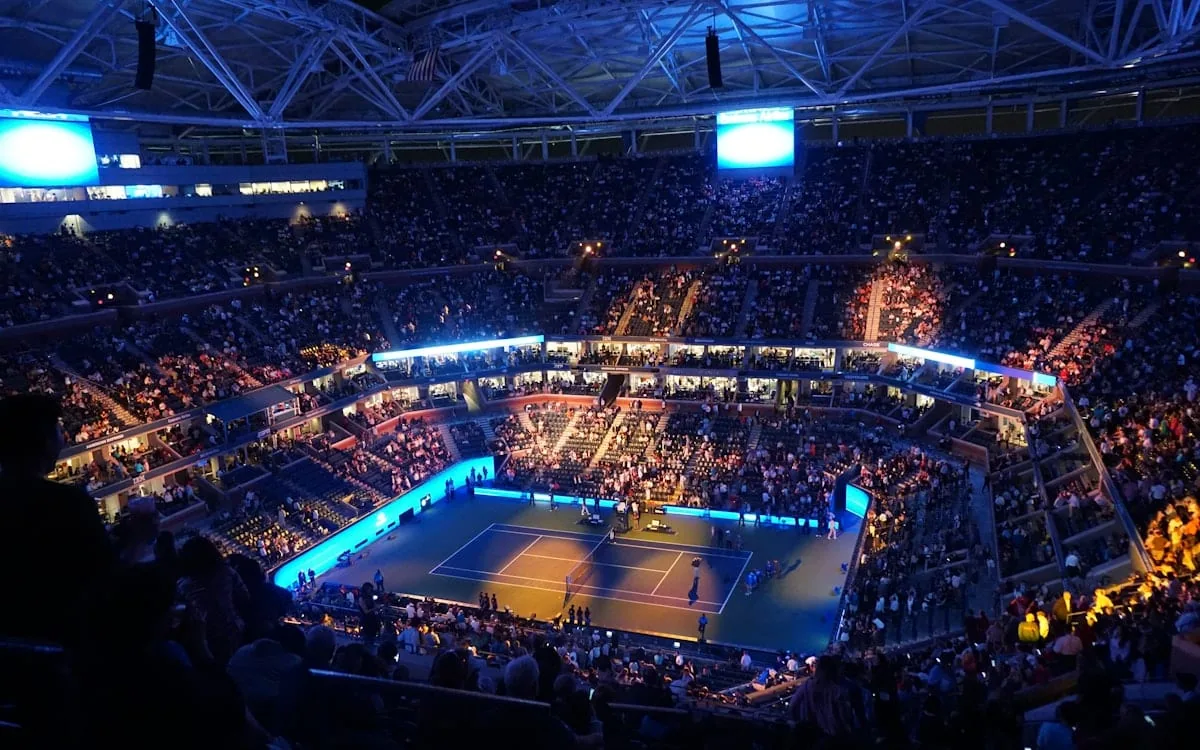
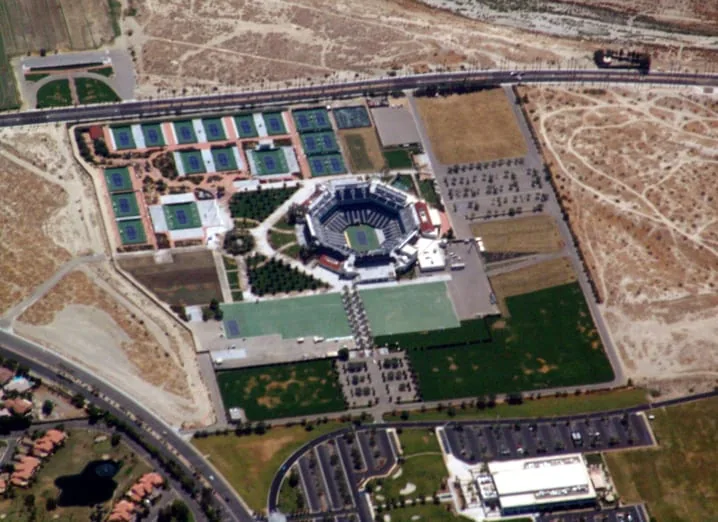
Start with the place, because it is one of the great oddities of the tennis calendar. The Cincinnati Open is not really in Cincinnati. It is played at the Lindner Family Tennis Center in Mason, a suburb about twenty miles north-east of the city, on a site that for decades felt like a county fair that happened to have Grand Slam champions wandering through it. You could stand three feet from the best player in the world on a practice court with a paper cup of lemonade in your hand. Fans loved it precisely because it did not feel grand.
It has grown up since. A campus transformation worth around 260 million dollars has roughly doubled the footprint of the site, added new stadium seating and shade and space to breathe, and let the tournament expand its singles fields to 96 players. That is why the event now sprawls across eleven days instead of a tidy week: with 96 in the draw, 32 seeds, twelve qualifiers and five wildcards, there is simply more tennis to fit in. The total prize money this year is 9,415,725 dollars, and the champion walks away with 1,151,380 of it, plus the 1,000 ranking points that actually matter more to the people playing.
What has not changed is the weather. Ohio in mid-August is a wet blanket. The humidity sits on the court in the afternoon and does not lift until the lights come on, and every year somebody with a beautiful game gets beaten less by an opponent than by the air. Watch the towel routines. Watch how many players change shirts at every changeover. Cincinnati has always been where the summer starts to cost something.
The draw that opened up
Here is the situation Zverev has walked into. Jannik Sinner, the world No. 1, is not playing: a troublesome right knee. Carlos Alcaraz, the defending champion here and the world No. 2, is not playing either, still managing the right wrist that has shadowed his entire season — the injury that took him out of Roland Garros and then out of Wimbledon, and turned what should have been his summer into a long, frustrating wait. You can read our account of what that wrist has cost him if you missed it.
Subtract those two from a hard-court Masters 1000 and the whole thing tilts. Zverev, ranked No. 3, becomes the top seed. Novak Djokovic, seeded and still capable of turning any fortnight into his own, is a three-time champion at this event and remains the most dangerous name in the draw. But the two men who have spent two years dividing the sport's biggest trophies between them are both at home with ice packs.
On the women's side there is no such vacuum. Iga Swiatek is back to defend the title she won last year, Aryna Sabalenka heads the draw, and Elena Rybakina, Jessica Pegula and Coco Gauff anchor the remaining quarters — a genuinely open week with the No. 1 ranking still live between the top two. The women arrive in Ohio with everything to play for. The men arrive with a hole at the top of the sheet, and the question of who has the nerve to step into it.
Eleven years of nearly
If you do not follow tennis closely, Zverev may exist in your head as a name rather than a person. Here is the shape of him.
He is 198 centimetres tall — six foot six — and moves like someone considerably smaller, which is the first thing that makes him worth watching. He was born in Hamburg to a Russian tennis family; his father played Davis Cup for the Soviet Union, his mother coached, and his older brother Mischa was a top-30 player who now travels with him. He turned professional at 16. By 20 he was beating Roger Federer in a Masters 1000 final. By 21 he had won the ATP Finals, the season-ending event where the best eight play off, beating Federer and Djokovic back to back to do it. He won it again in 2021. He won Olympic gold in Tokyo the same year. He has 24 tour-level titles.
And for a decade none of it counted in the only currency that tennis really keeps score in.
He lost the 2020 US Open final to Dominic Thiem from two sets up, five games from the title, and then lost the fifth set in a tie-break. He lost the 2024 Roland Garros final to Alcaraz in five. He lost the 2025 Australian Open final to Sinner. Three finals, three defeats, and in between them a broken ankle in Paris in 2022 that required surgery and cost him most of a year, plus the low-grade public assumption that whatever it is that turns a great player into a champion, he did not have it.
That is a specific kind of career to carry around. Not failure — nobody with an Olympic gold and two ATP Finals titles has failed — but a persistent, public almost, replayed on highlight reels every time a major came round.
The Sunday in Paris
He won it on 7 June, on the red clay of Court Philippe-Chatrier, and he did it the hard way, which somehow felt appropriate.
His opponent was Flavio Cobolli, the Italian, playing the match of his life. Zverev took the first set 6-1 and looked like a man about to be efficient about it. Cobolli took the second 6-4. Zverev took the third 6-4. Then Cobolli, refusing to leave, won a fourth-set tie-break 7-5, and suddenly the German was one set from a fourth lost Grand Slam final, in front of a crowd that had begun to sense a story.
He won the fifth set 6-1.
Afterwards he said the line that has followed him ever since: no matter what happens now, he will always be a Grand Slam champion. It is not an elegant sentence. It is the sentence of somebody who has been asked the same question at every press conference for eleven years and has finally been handed the answer. He also became the first man outside the group of Alcaraz, Sinner, Djokovic and Nadal to win a major since Daniil Medvedev at the 2021 US Open — a fact that says as much about the era he has been trapped in as it does about him. We wrote about that fortnight and the two first-time champions it produced in our Roland Garros 2026 recap, and it still reads like the week the sport changed shape.
What happens after the thing finally happens
Here is where it gets interesting for anyone who enjoys watching people as much as watching tennis.
There is a well-known pattern in this sport: the player who finally wins their first major does not always kick on. Sometimes the release is so total that the next few months go soft. The thing they organised their entire life around has been achieved, and the ordinary Tuesday second round in a hot city stops feeling urgent. Andy Murray went through a version of it. So did Thiem, in a much sadder way.
Zverev has now had ten weeks of life on the other side. The evidence so far is mixed, and last week it was uncomfortable.
He went to Montreal for the Canadian Open as the top seed, got the first-round bye that comes with it, and lost his opening match to the Dutchman Tallon Griekspoor. He took the first set in a tie-break and then lost the next two: 6-7 (3-7), 6-2, 6-4 to Griekspoor. It was one of the best wins of Griekspoor's career and one of the flatter losses of Zverev's summer. The top seed was out before most casual viewers had noticed he was in.
You can read that two ways, and both are defensible. The pessimistic read: the hunger has gone, and a man who won the thing he wanted no longer finds Tuesday in Montreal worth bleeding for. The optimistic read: he played a clay season that ended in the most emotionally expensive fortnight of his life, took a grass season, and then flew to North America to start again on a surface that punishes anyone who is even five per cent off. Griekspoor is a big hard-court hitter who was playing well. Sometimes tennis is just that.
Cincinnati will tell us which read is right, and it will tell us quickly.
Why this tournament, of all tournaments
There is a neat symmetry to Zverev arriving here with something to prove, because Cincinnati is one of the places that has always liked him. He won it in 2021, beating Andrey Rublev 6-2, 6-3 in a final so one-sided it barely qualified as a contest — part of the best stretch of his career, the summer he also took Olympic gold. The courts here are quick enough to reward his serve and true enough to reward his backhand, which is one of the two or three best in the sport and the shot most likely to make you sit forward.
Last year he made the semi-finals and ran into Alcaraz while visibly struggling with the conditions, losing 4-6, 3-6 after a medical timeout, drenched and depleted. That is Cincinnati too. The city has given him a title and taken a fortnight from him, and this year it hands him a draw with the two men who have beaten him in his last two Grand Slam finals both absent.
For a player who has spent his career being told he cannot convert opportunity, that is a very loud invitation.
What to watch for when he plays
If you are going to give a few hours to a Zverev match this week, here is what to look at, because his tennis rewards attention in a way that does not always show up in highlight packages.
The second serve. This is his weather vane. When Zverev is comfortable, his second serve is a heavy, kicking thing that jumps at the returner's shoulder. When he is tight, it slows down and lands short, and you will see opponents step inside the baseline to attack it. You can read his entire mental state in one ball toss.
The backhand down the line. His forehand has been rebuilt more than once and remains the shot that betrays him under pressure. The backhand does not betray him. Watch how many rallies he wins by simply refusing to miss it, then flattening one out of nowhere.
The way he moves for a man that size. Six foot six athletes are not supposed to slide into a defensive backhand and recover in two steps. He does. It is the least discussed part of his game and probably the reason his career has lasted.
The long points. Zverev is one of the great rally-tolerant players of his generation. If a match reaches the third hour in Ohio humidity, he is usually the fitter man. That has cost him matches when he refuses to shorten points he could have won earlier, and it has won him plenty of others.
His head-to-heads, his stats and his year-by-year results all live on his player page if you want the numbers underneath the story. This season he is 38-10, with that one enormous title.
The fortnight after this one
Everything in August points at New York. The US Open is the last major of the year, and it is the tournament where Zverev came closest to his first before Paris — where he stood two sets up in 2020 and could not close it. Whatever happens in Ohio, the ranking points and the confidence he collects here are essentially a deposit on that.
There is a bigger question sitting behind all of it, and it is one the whole sport is quietly asking. Sinner and Alcaraz have redrawn the men's game so thoroughly that the rest of the tour has spent two years playing for third place — Sinner spent the spring breaking Djokovic's Masters 1000 records, a run we covered when he took the record in Rome. Now both of them are hurt, at the same time, in the same month, at the wrong end of a brutal season. Their absence has created a genuine opening, and openings in tennis close fast.
Zverev has spent eleven years being the man who arrives at the door a moment too late. This week the door is open and nobody is standing in it.
If you want a way in, take a night session. The lights come on over Mason around eight, the temperature drops maybe four degrees, the moths arrive, and the crowd — a mix of Ohio families, Cincinnati regulars and people who drove four hours from Indiana — settles into that particular hum American tennis crowds have. Somewhere in the middle of it will be a very tall German hitting backhands, no longer playing for the thing he could never get, which is a different and much more interesting kind of pressure. That is worth an evening of anyone's time.
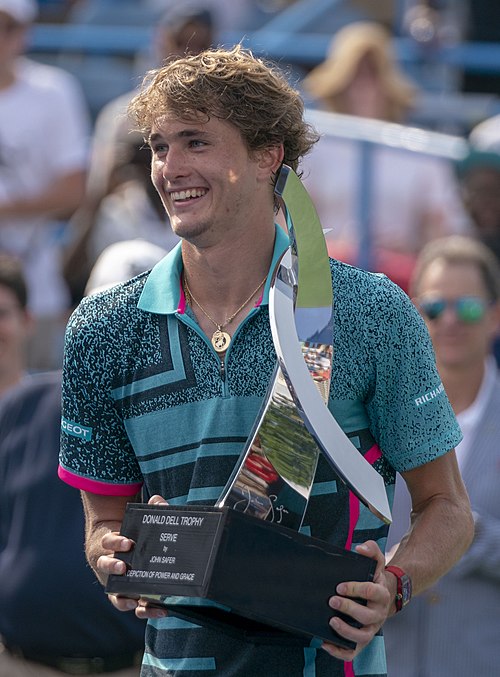
Photo: Alexander Zverev with a tour trophy by Keith Allison, CC BY-SA 2.0, via Wikimedia Commons.
🎾 Gear from this story
HeadHead Extreme TourAlexander Zverev's racket of choiceView on Amazon →As an Amazon Associate, SUPER.TENNIS earns from qualifying purchases.