Four surfaces, four different sports
The four Grand Slams are officially one sport. In practice, they test four different versions of it. A player's game that wins on grass at Wimbledon may actively hurt them on clay in Paris three weeks later. The mental reset required, the physical adaptation, the tactical overhaul — it's substantial enough that players spend weeks before Roland Garros doing nothing except learning how to play on clay again.
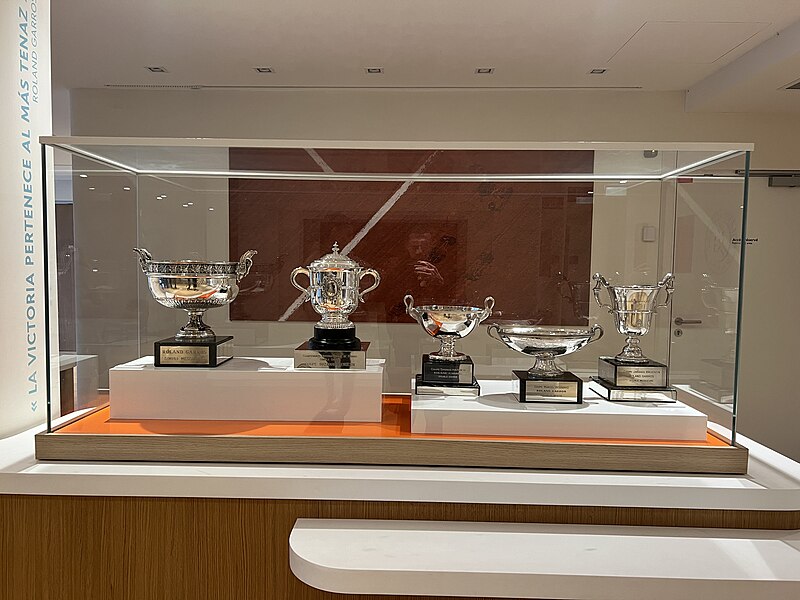
Here is the most illustrative fact: Pete Sampras won 14 Grand Slams, seven of them at Wimbledon, and never won Roland Garros. He reached the quarterfinals there once, in 1996. That quarterfinal is his best result across 15 Roland Garros appearances. Roger Federer won 20 Grand Slams and won Roland Garros once — in 2009, when Rafael Nadal had already been knocked out. These are not marginal players having bad luck. These are two of the greatest players in the history of the sport, and the clay neutralized significant portions of what made them great.
What the clay actually does
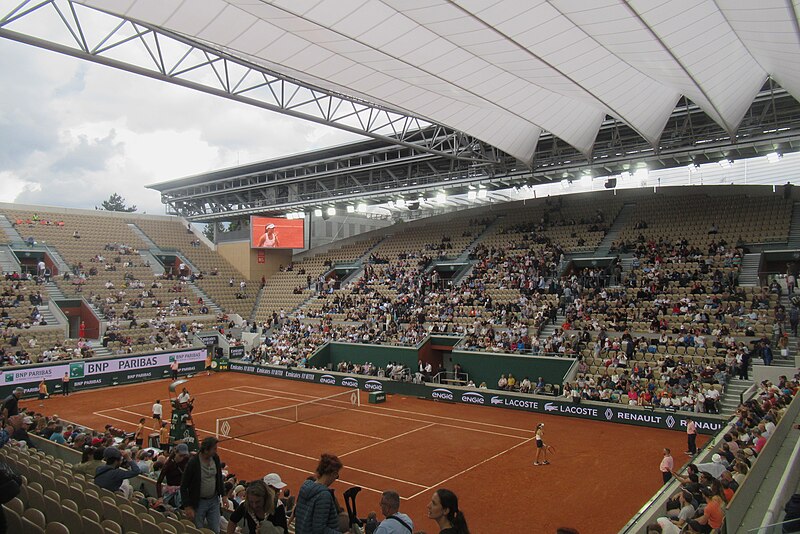
The physics explanation is straightforward. Clay slows the ball down by roughly 25 percent compared to grass and raises the bounce significantly higher. A flat, 130mph serve that skids through at knee height on grass sits up at waist height on clay, giving the returner considerably more time. A topspin forehand that lands at waist height on a hard court kicks up to shoulder height on clay, pulling the opponent out of their optimal strike zone.
This creates a tactical environment that rewards specific attributes: heavy topspin, defensive depth, physical endurance, and the ability to construct points over long rally exchanges rather than ending them quickly. It punishes attributes that work well on other surfaces: flat hitting, big serves, aggressive net approaches, and strategies based on taking time away from the opponent.
Sampras's game was built around a 130mph first serve that effectively removed the returner's options. On clay, that serve becomes returnable. The rest of his game — solid but not spectacular from the baseline — was not equipped to win five-set clay-court matches against players who had built their entire game around the surface.
The specialists
For most of tennis history, Roland Garros produced a category of player that didn't really exist elsewhere: the clay-court specialist. Thomas Muster won the 1995 French Open and was ranked world number one on clay with a career hard-court record that was mediocre at best. Gustavo Kuerten won three Roland Garros titles (1997, 2000, 2001) with a baseline game built entirely around topspin and defense. Carlos Moya won in 1998. Sergi Bruguera won in 1993 and 1994.
None of these players won more than two Grand Slams combined. On clay in Paris, they were better than Sampras, better than Becker, better than Edberg. On any other surface they were ordinary. The clay doesn't care.
The modern equivalent is Casper Ruud, who has reached two Roland Garros finals, won Masters titles in Miami and Montreal, and is competitive at the tour's highest level everywhere — but on clay in Paris he becomes something slightly different, a player who belongs in the last four almost regardless of the draw.
Compared to the other three
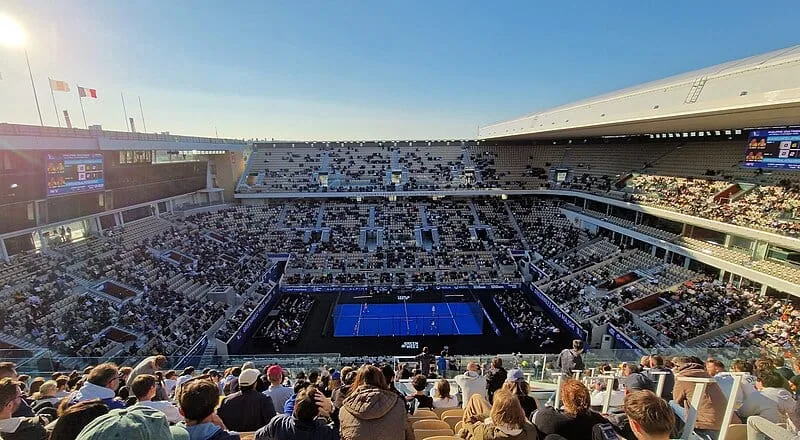
Wimbledon is the fastest Grand Slam, played on grass that allows serves to skid through and rewards aggressive net play. The grass season lasts two weeks in the professional calendar — players go from Roland Garros to Wimbledon with barely enough time to change their shoes. The bounce is low, the rallies are short, the conditions favor servers and aggressive players. It is the opposite of Roland Garros in almost every meaningful way. White clothing is mandatory. The crowd is quieter and more reserved. The history stretches back to 1877.
The Australian Open and US Open are both played on hard courts, which are faster than clay and slower than grass. They produce a middle ground — power players succeed but cannot simply serve their way through matches the way they can at Wimbledon. Both have retractable roofs and night sessions as standard practice. The US Open has the loudest, most electric crowd in tennis. The Australian Open has the longest travel requirements for European players and the most unpredictable weather. Both tend to reward players with the broadest games.
Roland Garros has the longest matches (five-set men's tennis on a slow surface where the server has limited advantage), the most partisan and unpredictable crowd, the only surface without electronic line-calling, and the highest physical demands in terms of lateral movement and endurance. It is, in the opinion of most coaches and players, the hardest Grand Slam to win if your game wasn't built specifically for clay.
Why Djokovic had to change everything
Novak Djokovic spent years trying to beat Nadal at Roland Garros and failing. His response was more systematic than any other player's: he overhauled his clay-court game specifically to counter what Nadal did. He flattened his swing path to take the ball earlier, before it kicked to shoulder height. He worked on his return of serve to neutralize Nadal's left-handed kick. He trained his movement for clay-specific lateral sliding.
It took him until 2015 to beat Nadal at Roland Garros, and until 2016 to win the title. He did it, eventually, by becoming a different player on clay than he was on other surfaces. No other current player has gone to those lengths. Alcaraz and Sinner are both young enough that clay is simply part of their vocabulary. But for a player who grew up training on hard courts in Eastern Europe, as Djokovic did, Roland Garros required a deliberate transformation.
The 180 people nobody talks about
Each season, 40 tons of clay are applied across Roland Garros's 18 courts. The maintenance staff — roughly 180 workers — tend the courts from dawn to dusk. They water the courts twice daily, roll them between sessions, repair damaged areas after matches, and replace sections of clay that wear down unevenly. During the tournament, the courts are prepared between every match.
The clay must maintain a specific moisture content. Too dry and the surface becomes hard and fast, losing what makes it distinctive. Too wet and it becomes heavy and unpredictable, with balls skidding unpredictably and players sliding dangerously. The people who maintain this are not athletes or tacticians, but the tournament's results are in part a function of their work.
Roland Garros without the clay is just another tennis tournament. The clay is the whole point.
Last updated: September 2026
Inside this Tournament
Latest news, related guides, and the data behind Why Clay Changes Everything: Roland Garros vs. Every Other Grand Slam.