The number that does not have a comparison
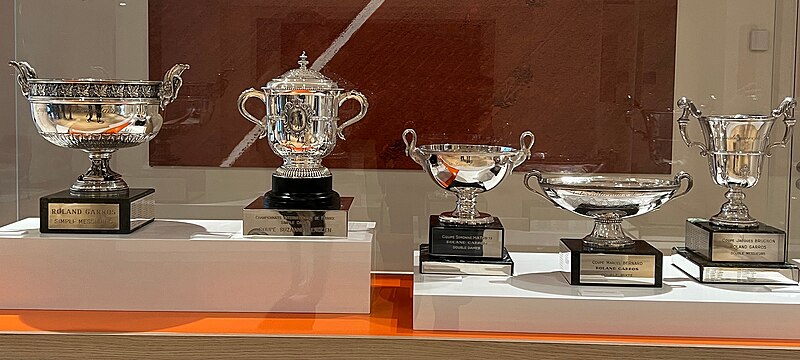
Fourteen titles at a single Grand Slam. Rafael Nadal's Roland Garros record is the kind of statistic that invites comparison and then defeats every comparison you attempt. Chris Evert won seven Roland Garros titles — the women's record until Swiatek challenged it — and that is considered one of the great records in tennis history. Bjorn Borg won six consecutive French Opens. His record was considered untouchable for decades. Nadal passed it in 2013 and then kept going.
To understand the scale of what 14 means: the second-highest number of titles at any single Grand Slam, in the men's game, is six (Borg at Roland Garros and Federer at Wimbledon). Nadal has more than twice that number. At the same tournament.
His career record there was 112 wins and four losses. Four losses across 19 appearances spanning 17 years. The 97% win rate holds up under any kind of scrutiny. He dropped just 37 sets across all 19 editions. He won four titles without dropping a single set in the entire tournament: 2008, 2010, 2017, and 2020. In 2020, he beat Djokovic — the world number one — in the final, 6-0 in the first set.
He was also 14-0 in finals. The only major where he never lost a final.
The longest match: six hours and 33 minutes
The longest match in Roland Garros history was not a classic. It was a first-round match between Fabrice Santoro and Arnaud Clément in 2004, two Frenchmen, played on a court probably not much larger than a living room in the context of global viewership. It lasted six hours and 33 minutes, ending 4-6, 3-6, 7-6, 6-3, 16-14. The final set alone lasted over two hours.
In 2020, Lorenzo Giustino and Corentin Moutet played a first-round match that went six hours and five minutes, also decided by a final-set score of 18-16. Both matches are reminders that before tiebreaks in the fifth set became standard, Roland Garros produced genuinely medieval final-set battles.
The longest match in tennis history is still Isner-Mahut at Wimbledon in 2010: 11 hours and five minutes, with a fifth set that ended 70-68. But Roland Garros, where the clay slows everything down and final sets were played without tiebreaks for most of the tournament's history, produced more of these extended matches than any other Grand Slam.
By comparison, the 2025 Roland Garros final between Alcaraz and Sinner (5 hours 29 minutes) is the longest Roland Garros final on record, despite being decided by a tiebreak.
The youngest and oldest
Michael Chang won Roland Garros in 1989 at 17 years and 109 days — the youngest men's Grand Slam champion in the Open Era. He was so young that reporters initially had to check whether his passport was accurate.
On the women's side, Monica Seles won the 1990 French Open at 16 years old. She would go on to win three consecutive French Opens (1990, 1991, 1992) before her career was interrupted.
On the other end, Serena Williams reached the Roland Garros final in 2016 while pregnant — or, at minimum, while in the early weeks of pregnancy that she confirmed after the tournament. Nadal, as noted, won his last title at 36. Martina Navratilova reached the 1999 Roland Garros doubles final at 42 years old.
Records that don't involve Nadal
Roger Federer won 14 Grand Slams total and exactly one Roland Garros title, in 2009. His record at Roland Garros is a study in the limits of greatness when the surface doesn't cooperate: he reached four finals there (2006, 2007, 2008, 2011) and lost all four to Nadal. His lone title came only because Soderling had already eliminated Nadal.
Pete Sampras won 14 Grand Slams and zero Roland Garros titles. His best result was a quarterfinal in 1996. This is probably the most striking single fact about what clay does to great players who were not built for it.
Iga Swiatek currently holds the women's record for consecutive Roland Garros titles with four straight from 2020 to 2024, matching Chris Evert's total of seven. Swiatek's career record at Roland Garros entering 2026 was 35-2 — a win percentage comparable to Nadal's in the early years of his run. She is 24 years old.
The surface itself
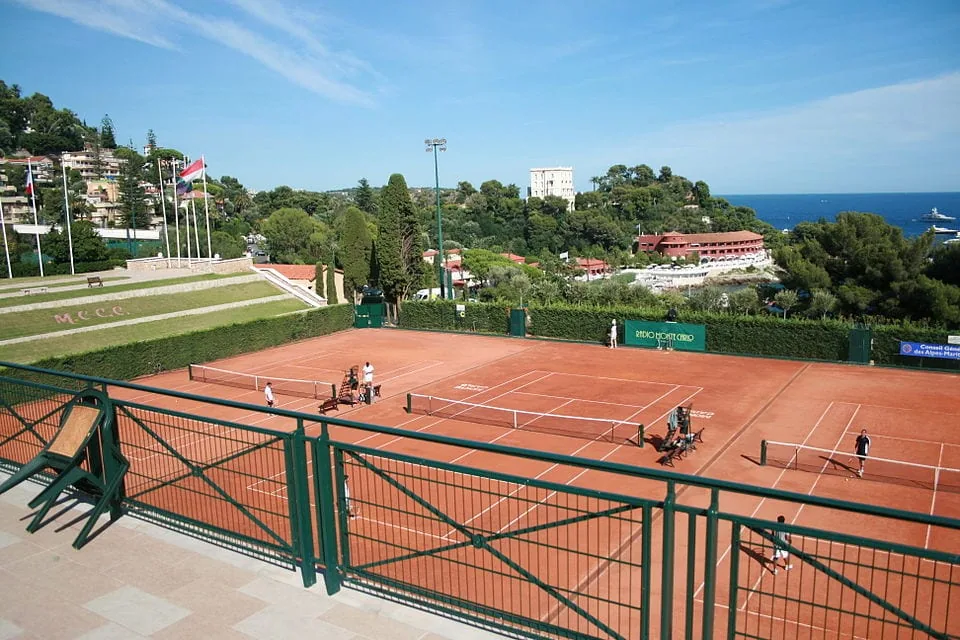
Roland Garros is the only Grand Slam still played on natural clay. The surface uses crushed red brick from northern France, processed in Belgium, and applied in a layer 1-2mm deep over a base structure. Approximately 40 tons of clay are used per season across 18 courts. The clay is watered twice daily, sometimes between sets during play.
It is also the only Grand Slam without Hawk-Eye electronic line calling — because the clay distorts ball marks in a way that makes human line judges and visible court marks more reliable than camera-based systems. In 2023, Wimbledon became the last major outside Roland Garros to fully adopt electronic calls.
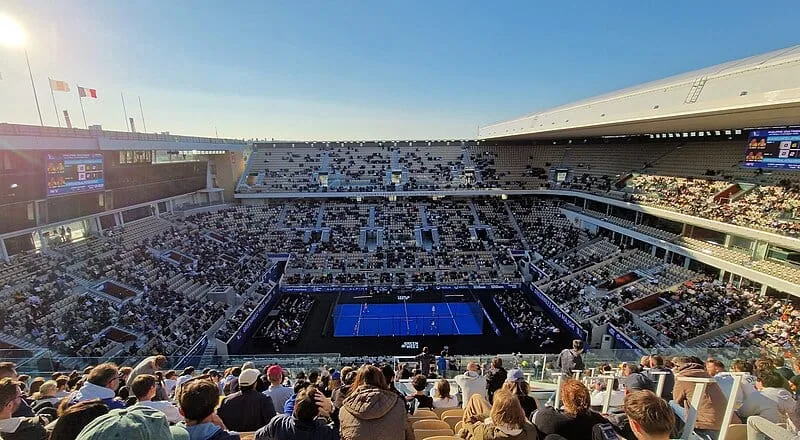
Court Philippe Chatrier, the main show court, holds 14,840 fans. The retractable roof was added in 2021, which allowed night sessions for the first time. The court is named for Philippe Chatrier, FFT and ITF president, who modernized professional tennis in the 1970s and 1980s. He died in 2000.
A number worth sitting with
Before Nadal's era, the record for most titles at Roland Garros was eight — held by Max Decugis, set across the years 1903 to 1914, in the pre-professional era when most of the world's best players couldn't afford to travel to Paris. In the modern professional era, Borg's six was the number everyone pointed to.
Nadal has 14. The next closest active player, in 2026, has two. That gap may not close in anyone's career who is currently playing. It may not close for a generation. It is the kind of record that professional sports produces once, if ever, at a specific intersection of player and surface and era and physical makeup that cannot be scheduled or predicted.
Last updated: September 2026
Inside this Tournament
Latest news, related guides, and the data behind Roland Garros Records: The Numbers That Define the French Open.