Look closely at the practice courts before a Slam, and you start noticing the babies. On a side court at Stade Roland Garros this week, Casper Ruud's two-week-old daughter slept through her father's serve drills, tucked into a baby carrier worn by his physio. A few corridors away, Naomi Osaka's daughter Shai — almost three now — was being walked from the players' lounge to the practice area, holding a hand from the family team. And two days earlier in Rome, the WTA quietly updated its Top 10 and made history: for the first time ever, two of the ten best women on the planet are mothers playing the tour with their toddlers in tow.
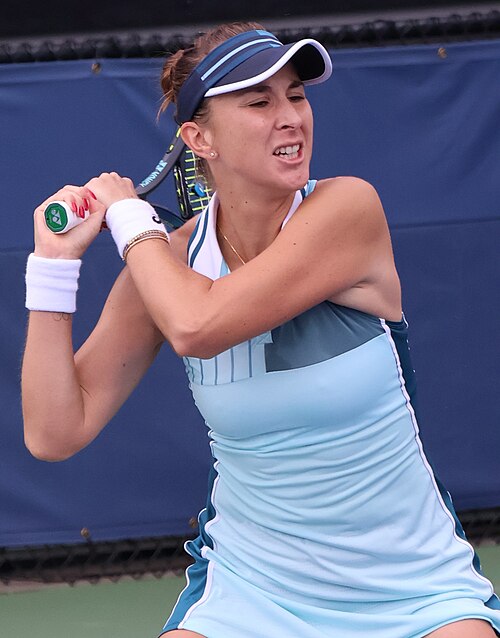
Sit with that for a second. The two mothers are Belinda Bencic, the Swiss former US Open champion who came back in late 2024 after her daughter Bella was born, and Elina Svitolina, the Ukrainian whose own daughter Skai goes home each evening to a father who happens to be the Frenchman about to play his final Roland Garros. Two mothers in the Top 10, at the same time. It has never happened before in WTA history.
And it is only the part you can see from the stands. Tennis used to lose its stars to family life — they had children, and that was the goodbye. This generation is doing the opposite. They are bringing the family along.
The roster, and why it keeps growing
Here is how far the shift has gone: just naming all the parents on the 2026 tour tells the story.
On the WTA side, Belinda Bencic is back inside the Top 10 in early 2026, climbing there fast after Bella was born in 2024. Svitolina, with daughter Skai (born 2022), just won the 2026 Italian Open final over Coco Gauff and beat Iga Swiatek in the semi. Naomi Osaka, daughter Shai born July 2023, returned in January 2024 and is now WTA No. 14 and the most talked-about comeback at Roland Garros 2026. Caroline Wozniacki came back in 2023 after a three-year break with daughter Olivia and son James, then announced a third pregnancy in 2025. Petra Kvitova brought her son Petr into the world in the summer of 2024 and returned to competition in Austin in February 2025 — fifteen months later, and after recovering from a C-section. Tatjana Maria, mother of two daughters, was named WTA Comeback Player of the Year after her second maternity leave. Victoria Azarenka, whose son Leo arrived in 2016, came back and reached US Open and Australian Open finals as a mom. And Angelique Kerber, daughter Liana, returned to play and now drifts in and out in semi-retirement.
The men's list is shorter. Casper Ruud (Norway) has a newborn daughter from late 2025, and called her his "lucky charm" after that Rome 2026 final run. Novak Djokovic has two kids — son Stefan (2014) and daughter Tara (2017) — and travels both to the Slams with his wife Jelena. Jannik Sinner and Carlos Alcaraz, the two men at the top of the game, are not yet parents.
That gap between the tours is not an accident, and it is worth saying plainly: the WTA now has at least eight active mothers competing at various levels, while the ATP has fewer top parents simply because the men do not give birth, take maternity leave, or fight their way back through a Special Ranking. The women carry more, and come back anyway. That is what makes their side of this story the remarkable one.
Why two mothers in the Top 10 is a really big deal
For almost the entire fifty-three years the WTA has existed, a top-ten ranking and active motherhood basically could not share the same sentence.
Kim Clijsters pulled it off in the late 2000s. Lindsay Davenport partway. Before them, almost nobody. The script was brutally simple and it barely changed for decades: a woman retired, had a child, sometimes tried a comeback that left her stranded outside the Top 50, and then retired for good.
The 2010s and 2020s started tearing that script up, piece by piece. Serena Williams came back after Olympia was born in 2017 and reached four Grand Slam finals as a mother. Victoria Azarenka made the 2020 US Open final ten months after returning. Caroline Wozniacki pulled off maybe the quietest miracle of all — coming back at thirty-three with two small kids and cracking the Top 100 again.
But none of those comebacks ever put two mothers in the Top 10 at once. This is the first time.
Bencic returned in late 2024, fourteen months after Bella arrived, and promptly won three smaller titles. By March 2026 she was back in the top twenty; by April, top ten. It is the fastest top-ten return from maternity leave in WTA history. Svitolina got rolling earlier — she had Skai in October 2022, was back on tour by March 2023, reached a Wimbledon quarter-final that summer, and has been a top-fifteen fixture ever since. Her Rome 2026 win over Gauff was the run that finally pushed her back into the Top 10 for the first time in three years.
Put their two names side by side in those rankings and you get a sentence the sport could not write before: at the very top of the women's game, being a parent and being good enough to reach a Slam final are no longer opposites.
Casper Ruud and his "lucky charm"
The men's version of this story is smaller in numbers but, somehow, the most openly tender thing a player said all spring.
Casper Ruud's daughter was born in late 2025. He skipped Monte Carlo with a knee problem, rehabbed at the Rafa Nadal Academy in Manacor, came back to Madrid as defending champion, lost earlier than he wanted — and then ran all the way to the Rome 2026 final, beating five clay specialists back to back to get there.
After losing that final to Jannik Sinner, somebody asked him about the run. He gave the credit straight to his daughter. Becoming a father, he said, had rewired how he walks onto the court. The bad days sting less now. The good days land differently too. Tennis finally fits inside a life that is about more than tennis — and you can hear, in that, a man who is lighter than he used to be.
For a player whose career has been defined by three Slam finals lost to the three men he most admired on clay — Nadal, Djokovic, Alcaraz — it was a strikingly clear-eyed thing to say about himself. The 2026 Ruud has the steadiest life off the court he has ever had. He also, in the very same year, has the cleanest path through a draw he has ever had.
The "lucky charm" line was a joke. What is holding it up is not.
The rule change that quietly rewrote everything
You can trace almost all of this back to one rule most fans have never heard of.
The WTA's Special Ranking lets a returning mother use her frozen pre-maternity ranking to get into a set number of tournaments. Rolled out in stages between 2017 and 2019, it is probably the most consequential thing the women's tour has done in a decade — and by now nearly every active mother in the Top 100 has leaned on it, except the few whose leaves were so short they never needed to.
It does three quiet, enormous things. It gets a returning mother into Slam main draws without dragging her through qualifying. It buys her the time to rediscover her game against the level of player she actually used to beat. And it kills the cruel either/or that defined the last generation: take a year off and lose your ranking, or rush back before your body is ready.
The payoff shows up in the numbers. The average time from maternity leave back into the Top 100 has collapsed — from roughly thirty months in the early 2010s to about twelve to fifteen months in 2025-2026. Kvitova made it in fifteen. Bencic in fourteen. Osaka in six. Wozniacki in thirty-six, but hers was a different shape entirely — a hard retirement, then a soft return three years on.
The men, for what it is worth, have never needed an equivalent rule, because fatherhood does not force you off the tour. Ruud kept playing right through the spring his daughter was on the way and arriving.
Naomi Osaka and what an honest comeback looks like
Ask any team on tour what a comeback should look like, and a lot of them will point at Naomi Osaka.
She gave birth in July 2023. She was back at Brisbane by January 2024 — and she lost early. Lost first round in Melbourne. Lost in three sets to Iga Swiatek in the second round at Roland Garros. That whole first year was the rebuild. Then the second year, 2025, gave her a US Open semi-final and the partnership with coach Tomasz Wiktorowski that now defines her 2026.
What set Osaka apart is that she never dressed the absence up as anything other than what it was. She talked openly about post-partum recovery. She brought Shai to tournaments — the family travels together, as a unit. And she flatly refused to perform the glossy celebrity-comeback story, the one where the returning champion is supposed to blow her first opponent off the court in 47 minutes and announce that time away was the best thing that ever happened to her tennis.
Instead she lost matches. Gave flat, honest interviews. Let her recovery take exactly as long as recovery takes. And two and a half years on, the result is the most believable long-haul comeback the WTA has produced since Serena's 2018 return. Sometimes the bravest thing a star can do is refuse to pretend.
The Big Three, now as dads
On the men's side, where the time away is shorter, the story is about something else: visibility — letting the world see it.
Novak Djokovic married Jelena in 2014. Their son Stefan arrived that October, daughter Tara in September 2017, and both kids have travelled to most of his Slams ever since. For more than a decade now, the family box at Court Philippe-Chatrier and Rod Laver Arena has been its own recognisable part of the Djokovic show.
Roger Federer, retired since 2022, has four — twin girls Charlene Riva and Myla Rose (born 2009) and twin boys Leo and Lenny (born 2014). The girls, now 16, have trained on and off at the Rafael Nadal Academy in Mallorca, though Federer has said plainly they were never all that interested in chasing tennis professionally. The boys have spent more time on court. His whole approach is hands-off: he has been clear he wants his kids to pick their own sport, not simply inherit his.
Rafael Nadal, also retired, has two sons — the first born in 2022, the second, Miquel, in August 2024. The eldest has already turned up at several Mallorca tributes alongside Federer, Djokovic, Murray, Alcaraz and Swiatek. And Nadal himself has said that becoming a father was the single biggest shift in his outlook across the final decade of his career.
Almost by accident, the Big Three have handed the next generation a parenting template. Sinner probably will not pick it up soon — at 24, there is no sign of him starting a family — but the group right behind him is walking straight toward it: Ruud at 27, Alex de Minaur and Katie Boulter heading for a 2026 wedding, Cameron Norrie engaged, Sebastian Korda engaged.
Svitolina and Monfils: a whole tennis family under one roof
If you want the most concentrated version of this entire story, you will find it in one household: the Svitolina-Monfils home.
They are both tour players. They married in 2021, and their daughter Skai was born in October 2022. Together they have become one of the most visible mixed-tour families in the sport — Monfils on the ATP, Svitolina on the WTA, and a little girl on a schedule coordinated between the two of them.
This particular week before Roland Garros 2026 has been an especially heavy one for them. Monfils is getting ready for his Roland Garros farewell on Thursday May 21, an evening built around his career with music, friends and a 7:30 p.m. exhibition on Court Philippe-Chatrier. Svitolina, meanwhile, is preparing for the main draw on the other side of the very same building, having won Rome two weekends earlier and arrived as a genuine top-five threat. Their daughter is, you imagine, somewhere in between — a hand to hold on either side.
It is the clearest proof the sport has right now that family life and elite competition really can run side by side. Most tennis families live one step removed, where the partner is not also a player. The Svitolina-Monfils home is the one where all of it — the careers, the parenting, the goodbyes — happens inside the same walls.
What this generation finally figured out
Pull back, and three threads run underneath the whole parenthood story.
The first is that the gap between giving birth and getting back has shrunk dramatically. The rule changes, the medical support, the partners stepping up, and a sport that has finally made room for the working mother have all pulled that average return time down by more than a year compared to the 2000s.
The second is that mothers are not just clawing back to the Top 100 — they are reaching the Top 10. Bencic and Svitolina are the living proof. And the next decade will very likely give us a Slam champion who is also a mom; Osaka's 2025 US Open semi-final was the closest the field came last year.
The third is that the dads are letting themselves be seen. Ruud crediting his newborn daughter on a global stage after a Masters 1000 final is exactly the kind of moment the men's tour simply did not produce in the 1990s or early 2000s. The Sampras-Agassi era kept family life almost entirely off-camera. This 2026 group treats it as part of the story they are happy to tell.
Add it all up and the sport in 2026 is a different place than it was in 2016. There are children in the locker rooms now. The on-tour schools have grown. The family rooms at the Slams have spread out to make space. And when you watch the matches, you see the proof of it — kids in the player box, partners on the practice court, parents talking about their newborns in the post-match interview. These players have built lives wider than the calendar, and they are not hiding it anymore.
What is confirmed, and what is just mood
Confirmed: in May 2026 the WTA Top 10 contains two active mothers — Belinda Bencic and Elina Svitolina — for the first time in tour history. Confirmed: Bencic returned to the tour in late 2024 after the birth of her daughter Bella, and climbed back into the Top 10 in April 2026. Confirmed: Svitolina won the 2026 Italian Open on May 17, defeating Coco Gauff in three sets. Confirmed: Naomi Osaka's daughter Shai was born in July 2023; Osaka returned to competition in January 2024 and is the No. 14 seed at Roland Garros 2026. Confirmed: Casper Ruud's daughter was born in late 2025; he credited her publicly after the Rome 2026 final. Confirmed: Petra Kvitova returned to the tour in February 2025, fifteen months after the birth of her son Petr. Confirmed: Caroline Wozniacki returned in 2023 after a three-year hiatus and announced a third pregnancy in 2025. Confirmed: Tatjana Maria was named WTA Comeback Player of the Year following her second maternity-leave return. Confirmed: Novak Djokovic has two children (Stefan, October 2014; Tara, September 2017); Roger Federer has four (twin girls born 2009, twin boys born 2014); Rafael Nadal has two sons (the first born 2022, Miquel born August 2024).
Confirmed by Ruud: that his daughter restructured his match-day psychology, the bad days now matter less, the family unit has stabilised what tennis is for him. Confirmed by Federer: his daughters "were never passionate about tennis," and he was "relieved about it."
Just mood, for now: whether any of the engaged-but-not-yet-married players (Aryna Sabalenka and Georgios Frangulis, Maria Sakkari and Konstantinos Mitsotakis, Sebastian Korda and Ivana Nedved, Tommy Paul and Paige Lorenze, Alex de Minaur and Katie Boulter, Cameron Norrie and Louise Jacobi) will become parents inside their current tour years. Also unconfirmed: any wider tour-policy changes for paternity on the ATP side; the men's tour does not yet operate a Special Ranking equivalent for the rare case of a primary-caregiver father on extended leave.
The bottom line
This shift is generational and structural at the same time, and the two feed each other. The generational part is the cohort itself: players born between 1989 and 2000 are hitting the years when most people get married and start families — and this time the tour has handed them rule changes, medical support and travel infrastructure that let them stay in the sport while they do it.
The structural part is everything you now see from your seat. The player box used to be parents, coach, agent. Now it also holds a partner, two kids, a stroller and, more often than not, a former champion from the previous era who has dropped by on an off week. The locker room used to be silent. Now it has a daycare wing. The post-match interview used to be a tactical breakdown. Now it regularly opens with a player thanking a newborn daughter for the run.
Tennis is no longer a sport that asks you to give up the rest of your life until your clock runs out. The class of 2026 has finally won the argument the last generation only managed to start.
So here is what to do. The next time a Slam final unfolds on a Saturday or Sunday afternoon in Paris, Wimbledon, New York or Melbourne, look up at the player box. Half of it will be doing what every player box has always done — leaning forward, holding its breath. The other half, more and more, will be asleep in a baby carrier or pulling faces at the camera during the second changeover. That is what the modern tour finally looks like. And honestly, it looks a lot like life.
Sources
- WTA: Mother's Day on tour — players reshaping the comeback conversation
- WTA: Mom's the Word — Serena, Vika & active WTA mothers
- ATP Tour: Parenthood on ATP Tour
- ATP Tour: Casper Ruud's lucky charm — Norwegian credits newborn daughter for Rome run
- Tennis.com: Petra Kvitova announces maternity leave comeback
- Tennis.com: Joy — not results — brought Petra Kvitova back to tennis
- Olympics.com: Petra Kvitova announces return to tennis competition after maternity break
- Tennis.com: Mother's Day — Tennis moms open up about life beyond the court
- Olympics.com: Osaka, Wozniacki, Kerber and Svitolina lead eight mothers in Australian Open draw
- Hello Magazine: Novak Djokovic's rarest photos of children Stefan and Tara
- Sportskeeda: Wife Jelena on Serb's relationship with daughter Tara & son Stefan
- Olympics.com: Roger Federer's twin daughters practise at Rafael Nadal Academy
- Tennis World USA: Rafael Nadal and his wife Mery Perello welcome second son Miquel
- Essentially Sports: Caroline Wozniacki's kids comeback profile
- WTA: Belinda Bencic ranking watch
Photo: Belinda Bencic at the 2023 US Open / Hameltion / Wikimedia Commons / CC BY-SA 4.0
Last updated: August 2026
🎾 Gear from this story
BabolatBabolat Pure DriveCasper Ruud's racket of choiceView on Amazon →As an Amazon Associate, SUPER.TENNIS earns from qualifying purchases.