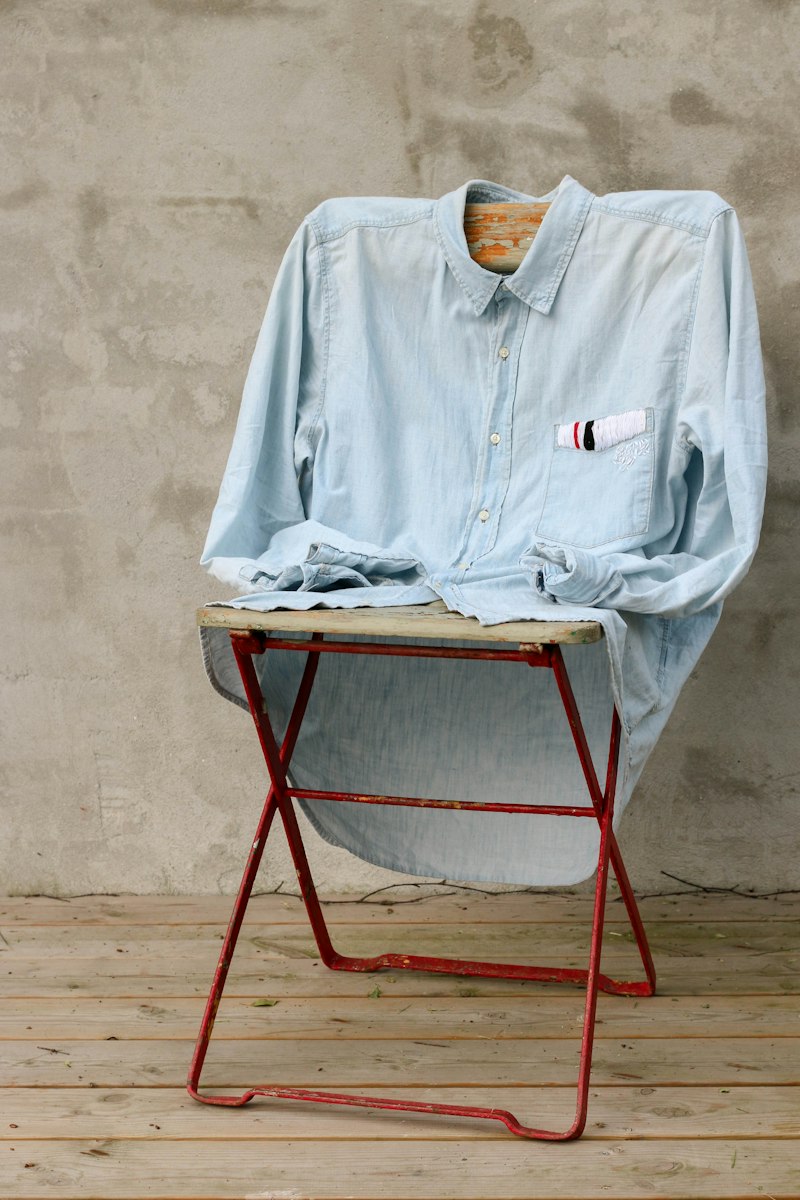
No sport has influenced fashion quite like tennis. For over a century, what players wore on court has shaped what people wore on the street — from Fred Perry's polo shirts to Andre Agassi's denim rebellion. The tennis aesthetic, with its preppy-chic appeal and "old money" elegance, has dominated fashion trends for several seasons. Here is a visual journey through the decades of tennis fashion, told through the photographs that defined each era.
The Victorian Era — Corsets, Gloves, and Romance on the Court
It all began in Victorian England, around the 1860s, when tennis became popular among the aristocracy. Men wore jackets and flannel trousers, while women played in tight corsets, long multi-layered skirts, gloves, and sun hats. In those days, the tennis court was one of the few places where unmarried men and women could socialize without chaperones — looking good at the expense of comfort was essential for making a match, both on and off the court.
As the sport evolved, players began wearing white cotton and linen, but clothing remained formal and luxurious, with lace inserts and decorative patterns. The tennis outfit was essentially a variation of what one might wear to horse races or garden parties. The first crack in this system came at Wimbledon 1887, when 15-year-old champion Charlotte Dod appeared in a calf-length skirt — her youth excused the scandal, but older competitors complained that her clothing gave her an unfair advantage.
The 1920s — Suzanne Lenglen Rewrites the Rules

Before Suzanne Lenglen, women played tennis in ankle-length skirts, long-sleeved blouses, and corsets. The French superstar shattered every convention: she wore calf-length pleated skirts, sleeveless tops, and her signature silk bandeau headband. In an era when showing your forearms was considered scandalous, Lenglen's outfits were front-page news across Europe.
Lenglen was the first tennis player to become a fashion icon. She collaborated with designer Jean Patou, making her the first athlete to have a couture partnership — a model that every modern sports brand would later copy. Her style wasn't just aesthetic rebellion: the lighter, shorter clothing gave her a physical advantage, allowing the fluid movement that made her nearly unbeatable.
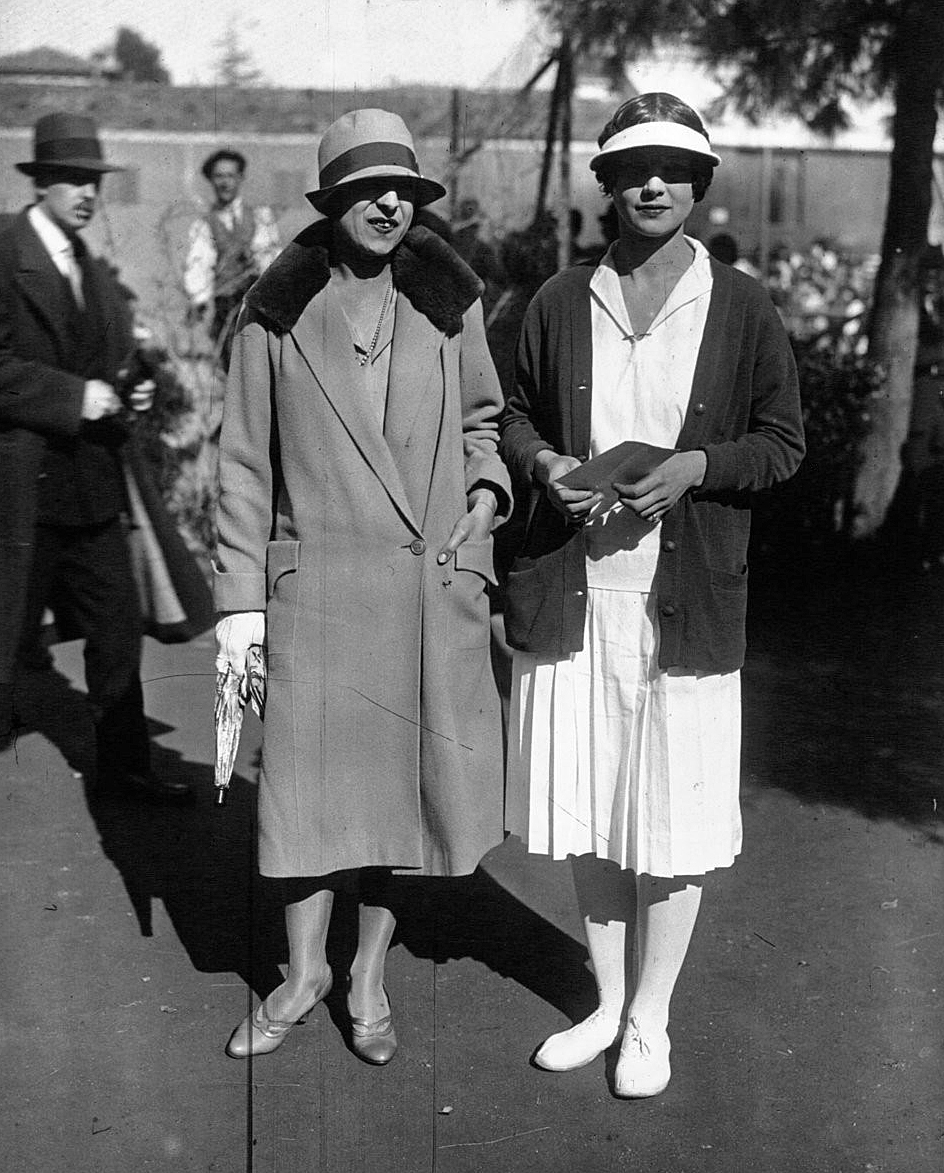
Meanwhile, the standard for women who weren't Lenglen remained remarkably conservative. Tennis instruction books from the 1920s show women in full-length skirts and stockings, wielding heavy wooden rackets on grass courts.

The 1930s — Fred Perry and the Birth of Sportswear

Fred Perry won three consecutive Wimbledon titles (1934–1936) wearing crisp white polo shirts with his signature laurel wreath logo. After retiring from tennis, Perry launched his eponymous fashion brand in 1952, and the polo shirt he had worn on court became a symbol of British subculture — adopted by Mods, skinheads, and indie rockers across the decades.
But it was René Lacoste — nicknamed "the Crocodile" for his love of crocodile-skin suitcases — who truly invented modern sportswear. In the late 1920s, he designed a breathable short-sleeved polo shirt to replace the heavy long-sleeved shirts players wore. He later adorned it with his iconic crocodile logo, creating what became one of the most recognizable garments in fashion history. Gwyneth Paltrow wore Lacoste polo dresses throughout The Royal Tenenbaums, cementing the brand's crossover into pop culture.
Meanwhile, men's shorts arrived on court in 1932 when Bunny Austin appeared at Wimbledon in shorts instead of the traditional flannel trousers — and everyone followed suit. The all-white dress code was more than tradition: white reflected sunlight, hid sweat stains on natural fabrics, and signaled the wealth of players who could keep their clothes pristine without physical labor.
The 1960s–70s — Ted Tinling, the Couturier of Tennis

No single person shaped tennis fashion more than Ted Tinling. A former Wimbledon official turned designer, Tinling created custom dresses for the world's best players from the 1940s through the 1980s. His career-defining moment came in 1949 when he designed lace-trimmed underwear for Gussie Moran at Wimbledon, causing a scandal that got him banned from the tournament for 33 years.
Undeterred, Tinling continued designing for players including Billie Jean King, Virginia Wade, and Chris Evert. His creations pushed boundaries: sequins, rhinestones, bold colors, and dramatic cuts that transformed tennis dresses into works of art. Tinling understood something that took the tennis establishment decades to accept — that what players wore was part of the spectacle.

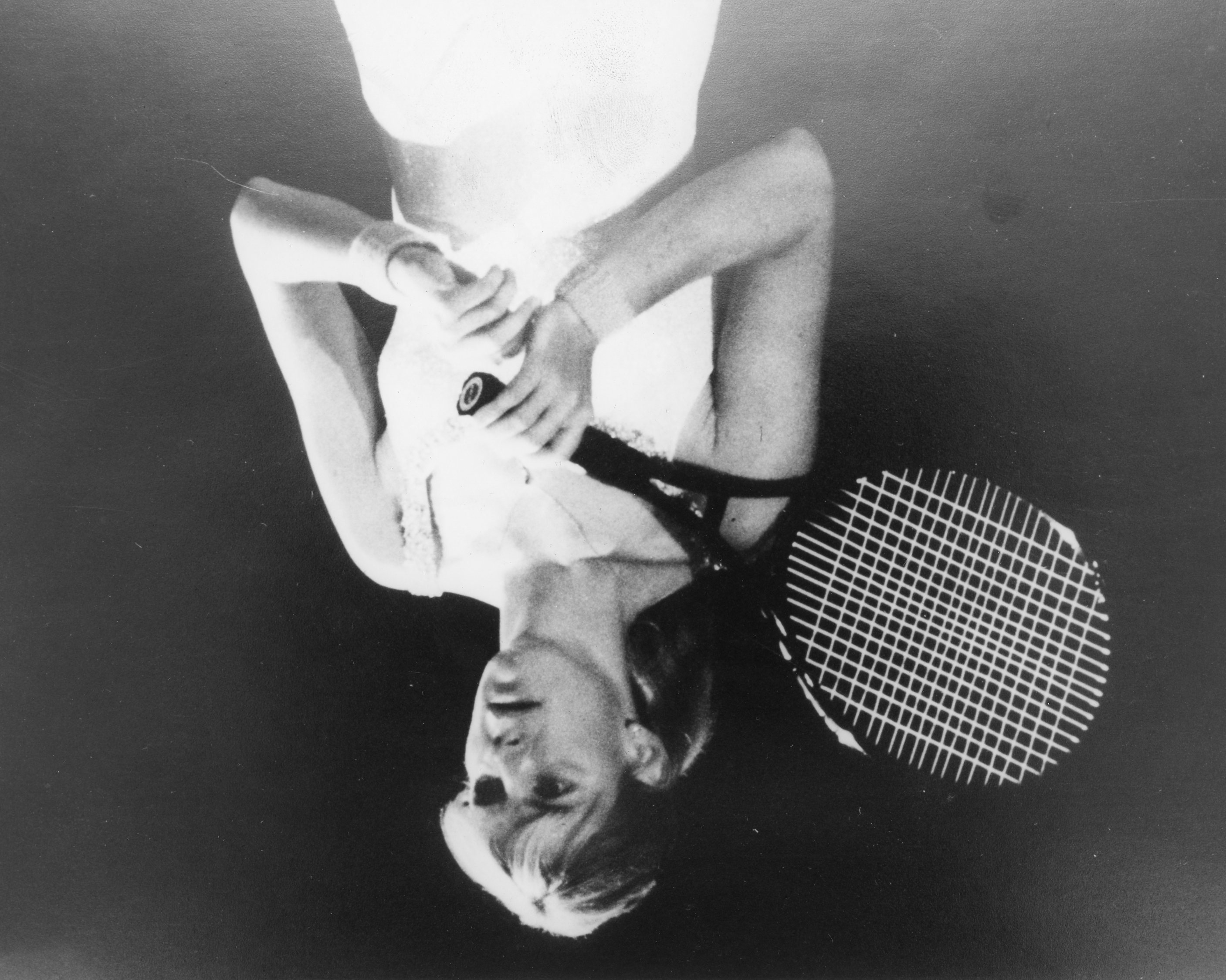
The 1980s — Headbands, Short Shorts, and Attitude

The 1980s brought personality to men's tennis fashion. John McEnroe's red Nike headband became as iconic as his temper, while Bjorn Borg's striped Fila shirts and tight shorts defined Scandinavian cool. The decade saw the first major commercial endorsement deals: Nike, Fila, and Ellesse competed fiercely to dress the top players, turning tennis outfits into marketing statements.
For women, Chris Evert's clean, preppy style contrasted with Martina Navratilova's athletic look — the first female player whose outfits emphasized power and movement over femininity. The decade also saw the rise of the tennis bracelet, named after Chris Evert's diamond bracelet that broke during the 1987 US Open, stopping play while she searched for the clasp.
The 1990s — Agassi's Denim Revolution

Andre Agassi exploded onto the tennis scene in the late 1980s wearing denim shorts, a mullet, and hot-lava Nike shirts in colors that had never been seen on a tennis court. His Nike campaign — "Image is Everything" — was deliberately provocative, positioning Agassi as the anti-establishment rebel in a sport defined by tradition and conformity.
Agassi's fashion evolution mirrored his personal journey. The wild-haired rebel in acid-washed denim gradually transformed into the shaved-headed minimalist in sleek black — a visual metaphor for growing up. His influence was enormous: after Agassi, tennis could never go back to all-white monotony. He proved that self-expression belonged on the court, and every colorful outfit worn by today's players owes something to his denim revolution.

The 2000s — Federer's Elegance and Nadal's Pirate Look

Roger Federer brought a new level of sartorial sophistication to tennis. His Nike outfits were meticulously designed — the cream cardigan at Wimbledon 2006, the gold-trimmed jacket at the 2009 Australian Open, the monogrammed blazer. Federer treated Centre Court like a runway, and his attention to detail influenced an entire generation of players. After leaving Nike for Uniqlo in 2018 for a reported $300 million deal, he helped prove that tennis fashion was worth blockbuster money.

Rafael Nadal was Federer's stylistic opposite. His early-career look — sleeveless Nike shirts exposing massive biceps, three-quarter-length capri pants, and a pirate-style bandana — was unlike anything tennis had seen. Critics called it too casual, too aggressive, too much. But the "pirate look" became one of the most recognizable outfits in sports history, perfectly matching Nadal's feral intensity on the clay.
The 2000s–2010s — The Williams Sisters Rewrite Everything

Venus and Serena Williams didn't just change tennis fashion — they detonated it. Venus launched her own fashion line, EleVen, and wore self-designed outfits that ranged from denim skirts to lace-accented dresses. Serena went further: a black catsuit at the 2002 US Open, denim boots at the 2004 US Open, a full-body catsuit at the 2018 French Open that Nike designed with medical compression technology.
Serena's fashion choices were always deliberate statements. The black catsuit at Roland-Garros was partly designed to prevent blood clots after a life-threatening pulmonary embolism — but it was also a celebration of Black womanhood, inspired by the Marvel character Black Panther. When the French Tennis Federation criticized it, Serena arrived the next year in a custom Off-White tutu designed by Virgil Abloh, printed with the words "Mother, Champion, Queen, Goddess" in French.

The 2020s — The Influencer Era

Today's tennis fashion exists at the intersection of sport, streetwear, and cultural identity. Naomi Osaka's Nike collaboration incorporated Japanese design elements and anime-inspired graphics. Her partnership with Louis Vuitton made her the first tennis player since Federer to bridge the gap between sport and luxury fashion houses.

Carlos Alcaraz's Nike deal and Jannik Sinner's Gucci partnership represent the latest evolution: tennis players as full-spectrum brand ambassadors, as comfortable on a red carpet as on Centre Court. The 2020s have also seen the rise of sustainability in tennis fashion, with brands like Adidas creating outfits from recycled ocean plastic and Nike developing zero-waste manufacturing for player kits.

Why Is Tennis Clothing White?
The first Wimbledon tournament in 1877 established the all-white dress code that persists to this day at the All England Club. White was chosen for several reasons: it reflected sunlight and absorbed less heat, it signaled the wealth and social status of aristocratic players who didn't do physical labor, and it effectively concealed sweat marks on the natural fabrics of the era.
In the second half of the 20th century, all Grand Slams except Wimbledon abandoned the white-only rule, primarily for commercial reasons — with the advent of color television, vibrant clothing became a tool for attracting more viewers to the sport. Andre Agassi famously boycotted Wimbledon from 1988 to 1990 in protest against the restrictive dress code. In 2013, Roger Federer was asked to change his shoes mid-match because the soles were orange.
Tennis on the Runway — Fashion Collections Inspired by the Court
Lacoste was far from the only brand to bridge the court and the catwalk. Jean-Paul Gaultier's Hermès Spring/Summer 2010 collection featured tennis skirts, elongated cardigans, and flowing dresses in caramel, navy, and terracotta. Alexander Wang turned his Spring/Summer 2015 runway into a sports arena, reimagining Nike Flyknit trainers as form-fitting dresses. Alessandro Michele's Gucci Pre-Fall 2019 featured crossed-racket logos on sweatshirts.
In recent seasons, tennis-inspired collections have appeared from Miu Miu, Bottega Veneta, Christian Dior, Ralph Lauren, Lacoste x A.P.C., Balmain, and Celine. As contemporary fashion trends favor comfort, versatility, and self-expression, the tennis aesthetic — with its preppy-chic appeal and "old money" elegance — remains a favorite of style-conscious people worldwide.
From Corsets to Catsuits — What Tennis Fashion Tells Us
Tennis fashion has always been a mirror of society's attitudes toward class, gender, and self-expression. From the Victorian corsets that restricted women's movement to Serena's catsuit that celebrated it, from the all-white uniformity that enforced class boundaries to Agassi's denim that smashed them — every era's fashion tells a story about who was welcome on the court and who was pushing to get in. The sport that once demanded conformity now celebrates individuality, and the journey from white flannel to Nike Dri-FIT is, in many ways, the story of modernity itself.
Last updated: August 2026
🎾 Gear from this story
HeadHead Radical ProAndre Agassi's racket of choiceView on Amazon →As an Amazon Associate, SUPER.TENNIS earns from qualifying purchases.